
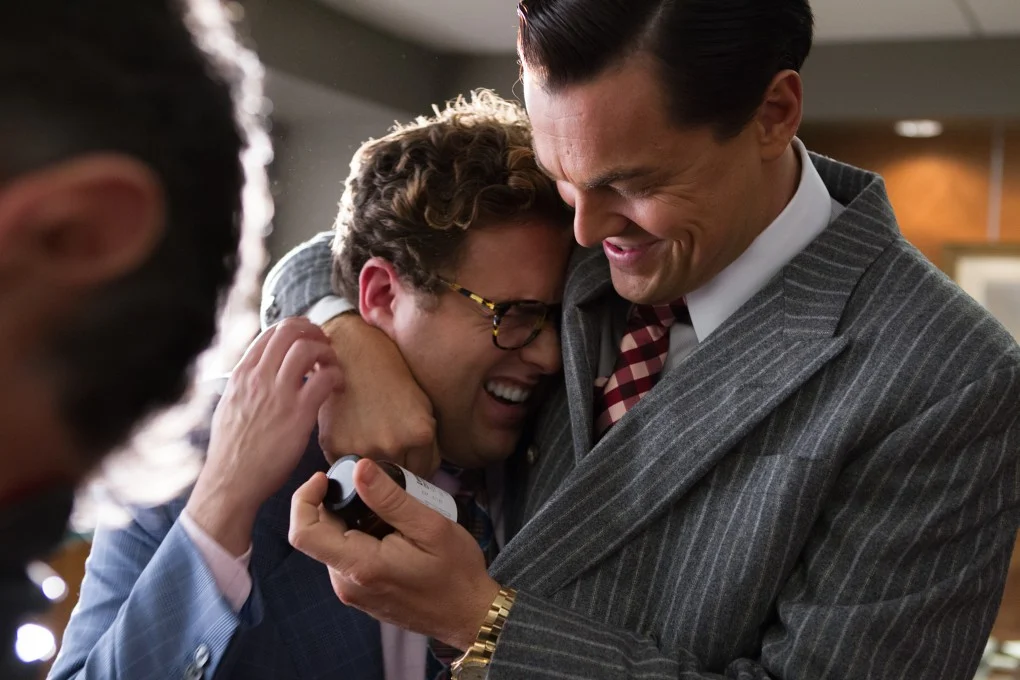
Before Jordan Belfort walked into our lives — chest-thumping, Quaalude-crawling, and howling at the moon — Leonardo DiCaprio was already a star. But The Wolf of Wall Street (2013) didn’t just add another great performance to his résumé. It fundamentally changed the way the world saw him as an actor. It was a before-and-after moment. A line in the sand.
The “Pretty Boy” Problem
For years, a quiet but persistent label followed DiCaprio around Hollywood. Talented? Absolutely. But also: safe. Polished. The kind of actor whose cheekbones got as much press coverage as his craft.
Yes, he had What’s Eating Gilbert Grape (1993) and The Aviator (2004). Critics had long known he was more than a heartthrob. But mainstream audiences — and, arguably, the broader cultural conversation — still associated him with Titanic‘s Jack Dawson: romantic, noble, and a little too easy to love.
He needed something that would blow that image apart. Enter Martin Scorsese, Jordan Belfort, and three hours of glorious, chaotic cinema.

Going Full Throttle
What makes DiCaprio’s performance in The Wolf of Wall Street so transformative is its total commitment to ugliness. Jordan Belfort is not a man you’re supposed to root for. He’s narcissistic, manipulative, drug-addled, and gleefully corrupt. DiCaprio plays him without a single moment of Hollywood vanity — no subtle wink at the camera, no redemptive softening.
The infamous Quaalude scene alone rewrote the rulebook. Watching DiCaprio contort his body down a flight of stairs, completely incapacitated, was less like watching an actor and more like witnessing a man publicly dismantle his own dignity — and enjoy every second of it. It was physical comedy at its most extreme, and it demanded the kind of fearlessness that most A-listers simply don’t have.
Then there’s the chest-thumping sales pitch scene. Or the yacht. Or the garage confrontation with Margot Robbie’s Naomi. In every frame, DiCaprio is operating at a frequency that feels genuinely dangerous — like he might break something, including the film itself.
Comedy Was the Secret Weapon
One of the most underrated aspects of DiCaprio’s reinvention in this film is how funny he is. Not quirky-funny or charming-funny — but genuinely comedic, with timing sharp enough to rival seasoned comic actors.
Before Wolf, few people thought of DiCaprio as a comedian. After it, that perception was gone forever. The film showed he could hold absurdist, over-the-top humor with the same authority he brings to dramatic intensity. That’s a rare combination, and it significantly expanded the range audiences now expect from him.
Hollywood Celebrities With the Most Expensive Jewelry Collections
Scorsese as the Catalyst
It’s worth noting that this wasn’t DiCaprio’s first collaboration with Scorsese — they had already made Gangs of New York, The Aviator, The Departed, and Shutter Island together. But Wolf felt like the partnership reaching its fullest, most uninhibited expression.
Scorsese gave DiCaprio the permission — and the creative environment — to be truly excessive. To never pull back. To trust that more, in this case, was absolutely more. The result was a performance that felt liberated in a way his earlier work, however brilliant, never quite did.

The Oscar That Wasn’t (and Then Was)
Ironically, DiCaprio didn’t win the Oscar for Wolf — he wasn’t even nominated that year in the acting category, a snub that still baffles film fans. His eventual win came for The Revenant (2015). But ask most cinephiles which performance better defines his greatness, and Wolf wins by a landslide.
That gap between awards recognition and cultural impact says everything. The Wolf of Wall Street didn’t need a trophy to cement its legacy.
A New Chapter
After 2013, DiCaprio’s choices shifted. He became more willing to take roles that were strange, physical, morally complex, or darkly comedic. The golden boy image didn’t just fade — it was actively replaced by something more interesting: the image of an actor who would do anything for the right role.
The Wolf of Wall Street didn’t just redefine Leonardo DiCaprio’s acting image. It set him free.

Mohit Swami is the Head of Content at GYANTV, overseeing content strategy, editorial planning, and quality control across the platform. With experience in managing digital content workflows, he ensures that every article aligns with accuracy standards, audience relevance, and ethical publishing practices. His work focuses on building trustworthy, engaging, and reader-first content in health, lifestyle, and trending news categories.