
Hollywood has always embraced new technology — from silent films to talkies, from practical effects to CGI. But nothing has shaken the entertainment industry quite like artificial intelligence. In 2026, AI is no longer a distant threat or a sci-fi concept. It is already inside the editing suites, on the casting desks, and in the very performances audiences are watching on screen. Here is a full look at how AI is changing the future of Hollywood acting — and what it means for the stars, the studios, and cinema itself.
AI Is Already Inside Hollywood Productions
The numbers tell a striking story. Around 70 percent of films now incorporate AI tools at some stage of production. Over 65 AI-focused studios have launched since 2022 alone. Machine learning models now assist with script analysis before cameras even roll — helping producers identify pacing problems, weak character arcs, and potential audience appeal. On set, AI systems automate lighting adjustments, camera tracking, and scene continuity. In post-production, tools like Runway’s Gen-2 and OpenAI’s Sora are being used for visual cleanup and minor reshoots, dramatically reducing the need for large VFX teams and lengthy render times. AI has quietly embedded itself into every stage of the filmmaking process.
Digital Doubles and De-Aging Are Now Standard
One of AI’s most visible impacts on Hollywood acting is the rise of digital doubles and de-aging technology. Studios like Disney and Marvel now routinely use AI-powered deepfake technology to make actors appear younger — something audiences saw with a young Luke Skywalker in The Mandalorian. When Paul Walker passed away during the production of Furious 7, AI was used to complete his performance using existing footage — a moment that was both technically extraordinary and deeply emotional. Today, if an actor cannot be on set, studios can create a digital version using previous footage and voice samples. What was once a last resort has become a standard production tool.
Voice Cloning Is Sparking Major Controversy
AI voice cloning has become one of Hollywood’s most controversial developments. During the 2025 awards season, it was revealed that both Netflix’s Emilia Pérez and A24’s The Brutalist had used a software called Respeecher to alter actors’ voices — blending their vocal performances with other singers or adjusting their range entirely. The revelations sparked fierce debate about consent, transparency, and artistic integrity. If an actor’s voice can be cloned, blended, or enhanced without the audience knowing, what exactly are they watching? These questions have no easy answers — and Hollywood is still trying to find them.
The Rise of AI Actresses
Perhaps the most explosive AI development of 2025 was the debut of Tilly Norwood — an entirely AI-generated actress created by a company called Particle6. Norwood was designed to be used in films for synthetic casting, localization, and marketing. The backlash from Hollywood was immediate and fierce. SAG-AFTRA stated that she was not an actor but a computer-generated character trained on the work of countless professional performers — with no life experience and no genuine emotion. Emily Blunt called it genuinely scary and urged agencies to stop embracing the technology. The controversy around Tilly Norwood crystallized every fear actors had been carrying since the 2023 strikes — that AI could one day make human performers replaceable.
Actors Are Fighting Back
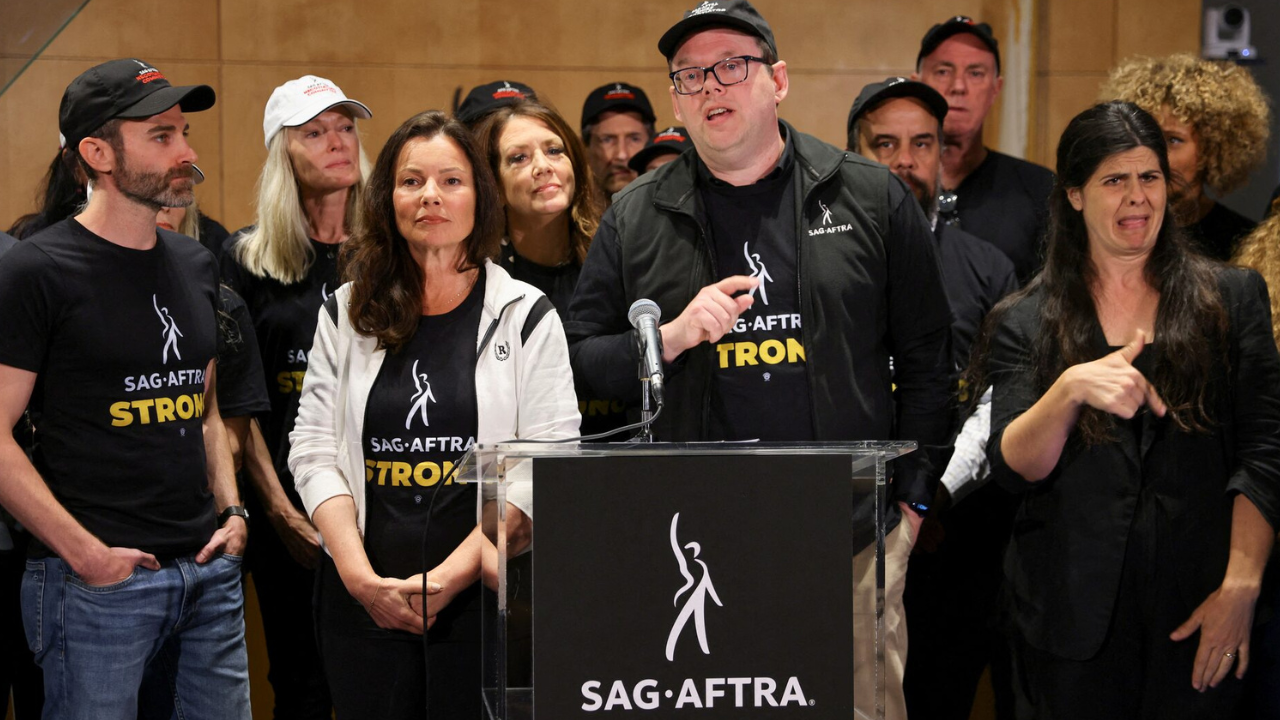
Hollywood’s acting community has not accepted these changes quietly. The 2023 SAG-AFTRA strikes were driven in large part by AI concerns — specifically the practice of studios body-scanning background actors to create digital replicas that could be used in future productions without additional pay or consent. Those union contracts expire again in 2026, and Hollywood is bracing for another major labor battle. In early 2026, director Daniel Kwan co-founded the Creators Coalition on AI alongside actors Joseph Gordon-Levitt and Natasha Lyonne — with support from Cate Blanchett, Kristen Stewart, and Taika Waititi — to regulate AI use and protect artists’ rights. The coalition is not against AI entirely. It is against its misuse.
The Oscars Have Drawn a Clear Line
In a landmark decision in 2026, the Academy of Motion Picture Arts and Sciences ruled that AI-generated actors and AI-written scripts are ineligible for Oscar consideration. The ruling sent a powerful message — human creativity remains at the heart of what the industry values most. It also acknowledged what actors have been arguing all along: that a performance born from genuine human experience, emotion, and vulnerability cannot be replicated by an algorithm, no matter how sophisticated.
Disney Goes All In — For Better or Worse
Not everyone in Hollywood is resisting. Disney made the industry’s biggest AI move yet by signing a licensing deal with OpenAI and investing one billion dollars in the company — granting access to 200 of its characters from Pixar, Star Wars, and Marvel through OpenAI’s Sora video generation platform. The move signaled that the era of studios quietly experimenting with AI was over. The public era of AI-assisted Hollywood filmmaking has officially begun — and the biggest player in entertainment is leading the charge.

Mohit Swami is the Head of Content at GYANTV, overseeing content strategy, editorial planning, and quality control across the platform. With experience in managing digital content workflows, he ensures that every article aligns with accuracy standards, audience relevance, and ethical publishing practices. His work focuses on building trustworthy, engaging, and reader-first content in health, lifestyle, and trending news categories.