
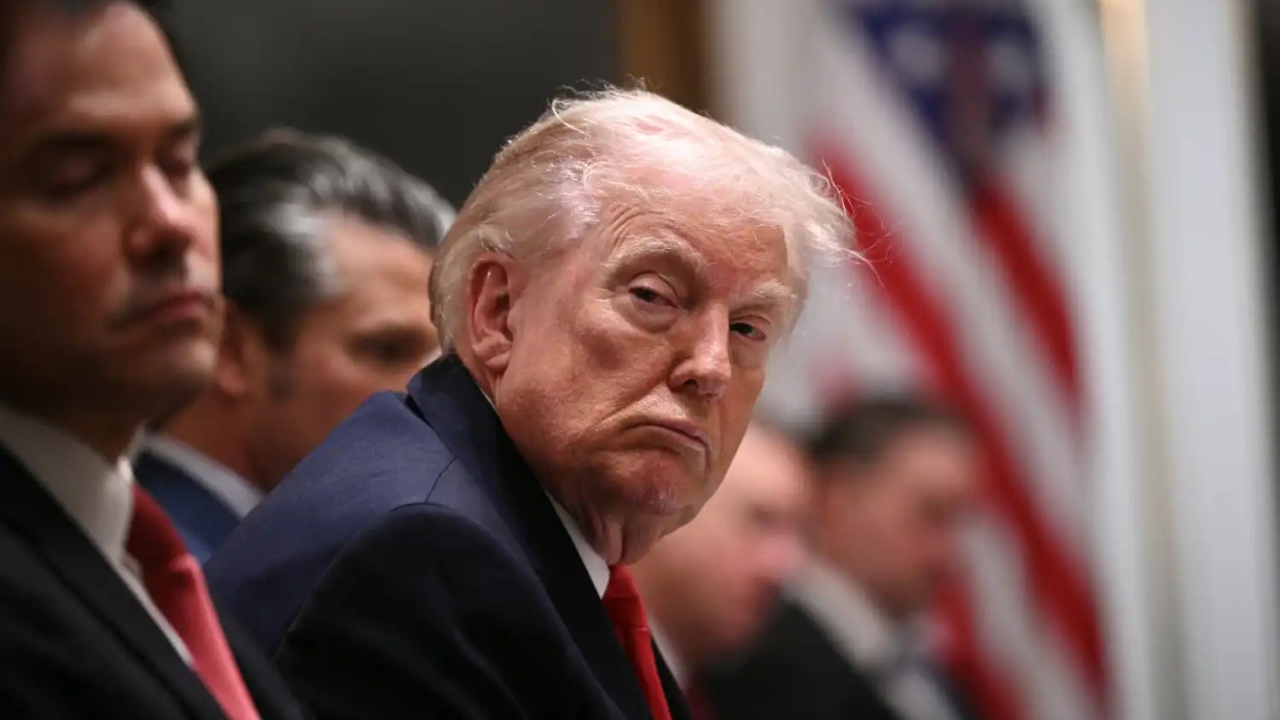
With midterm elections approaching, the fight between Trump and the Democrats has moved well beyond Washington speeches.
It is now playing out in redistricting battles, courtroom fights, and a wave of retirements that could decide which party controls Congress. Here is a clear breakdown of the biggest battles defining 2026.
The Fight for Congress — A Genuine Toss-Up
Control of Congress is the single biggest prize on the table this year.
A June 2026 NBC News poll found Democrats holding a five-point lead in the generic battle for Congress, with 49 percent of registered voters preferring Democratic control compared to 44 percent favoring Republicans. Independents lean toward Democrats by a wide margin, as do majorities of Black and Latino voters, younger voters, and college graduates. The House majority remains razor thin, which means nearly every competitive district could decide who holds power for the next two years. The Senate map favors Republicans more heavily, since Democrats would need to flip several states Trump won comfortably in 2024.
The Redistricting War
One of the most aggressive battles of the cycle has unfolded away from the campaign trail entirely — in the redrawing of congressional maps.
Trump has pushed Republican-controlled states to redraw districts mid-decade specifically to protect the GOP’s House majority, with Texas and Indiana among the most contested battlegrounds. The Supreme Court has already allowed Texas’s new congressional map to take effect, a significant win for Trump’s strategy. Democrats have fought back where they can — California Governor Gavin Newsom led a successful push to temporarily suspend his state’s independent redistricting commission, a move expected to create several additional Democratic-leaning seats. The redistricting fight is shaping up as one of the most consequential and least visible battles of the entire election cycle.
Trump and the Supreme Court — How He Is Reshaping America’s Justice System
Trump’s Approval Problem
Trump’s own popularity has become one of the biggest factors working against his party.
Polling through the first half of 2026 shows his approval ratings sliding, with particular weakness on the economy and inflation. Brookings analysis notes that for the first time since 2010, Democrats are now more trusted than Republicans to handle economic issues — a remarkable shift given how central the economy has historically been to Republican messaging. Analysts say this slide has put once-safe Republican seats in North Carolina, Maine, Alaska, and Ohio into genuine contention, while Iowa and Texas are no longer considered guaranteed Republican wins.
A Wave of Retirements
The political battle has also been shaped by who is choosing not to run at all.
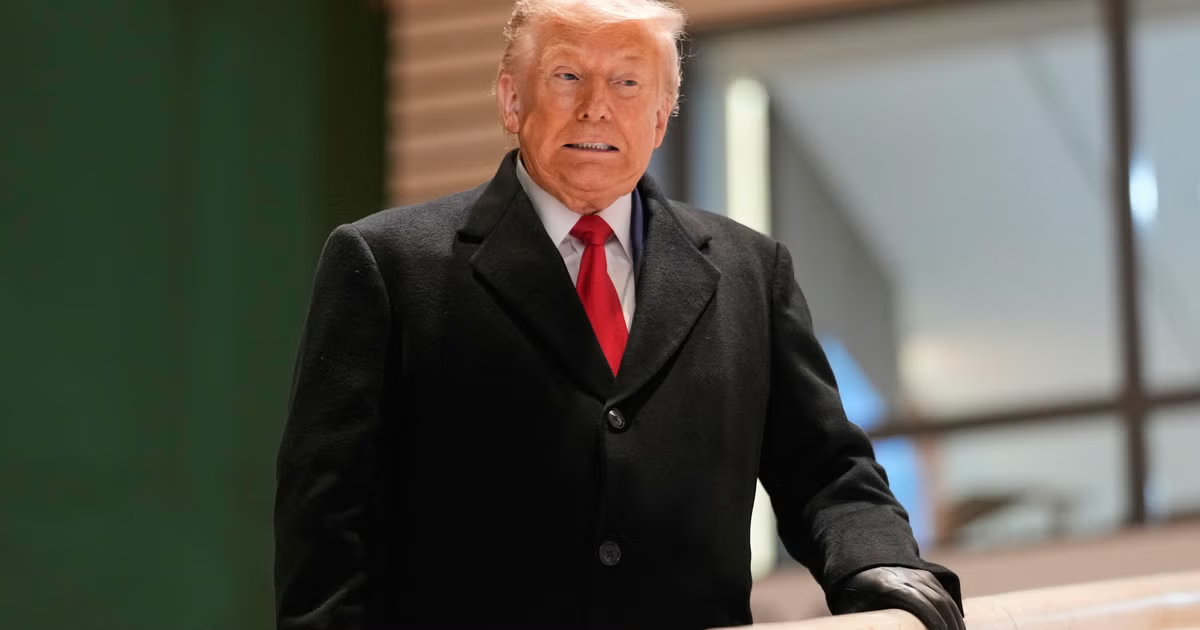
Several senators and House representatives have already announced they will not seek reelection in 2026, creating a series of open seats that both parties are racing to fill. Open seats tend to be more competitive than ones with incumbents, and strategists on both sides expect additional retirement announcements as the primary season unfolds — each one reshuffling the competitive map further.
Trump’s Direct Involvement in Races
Trump has taken an unusually hands-on role in individual House races, using his Truth Social platform to endorse loyal Republicans facing tough contests.
He has praised candidates for their military and law enforcement backgrounds and labeled them “MAGA Warriors,” signaling how much weight his personal endorsement still carries within the party. At the same time, he has used fundraising emails to attack prominent Democrats including Alexandria Ocasio-Cortez, Ilhan Omar, and House Democratic Leader Hakeem Jeffries directly by name — a sign of how personal and confrontational the political battle has become heading into the midterms.
Celebrities Who Are Licensed Athletes: Hollywood’s Hidden Sports Stars
Open Governor’s Races Add Fuel
Beyond Congress, several high-profile governor’s races are intensifying the national political battle.
Georgia’s open governor’s race has drawn serious attention after Republican incumbent Brian Kemp became term-limited, with Democrats including Keisha Lance Bottoms and Stacey Abrams positioning for a run in a state both parties view as a crucial battleground. Kentucky’s Senate race to replace Mitch McConnell has similarly become a test of Trump’s continued grip over the Republican Party, with candidates actively courting his endorsement.
What This Means Going Forward
The battles defining 2026 are not just about a single election — they are about which party controls the machinery of government heading into a presidential race in 2028.
Whether Republicans can hold their narrow congressional majority despite economic headwinds, or whether Democrats can convert their current polling advantage into actual seats, will depend heavily on how the redistricting fights, retirements, and Trump’s own approval numbers continue to evolve over the coming months.

Mohit Swami is the Head of Content at GYANTV, overseeing content strategy, editorial planning, and quality control across the platform. With experience in managing digital content workflows, he ensures that every article aligns with accuracy standards, audience relevance, and ethical publishing practices. His work focuses on building trustworthy, engaging, and reader-first content in health, lifestyle, and trending news categories.