
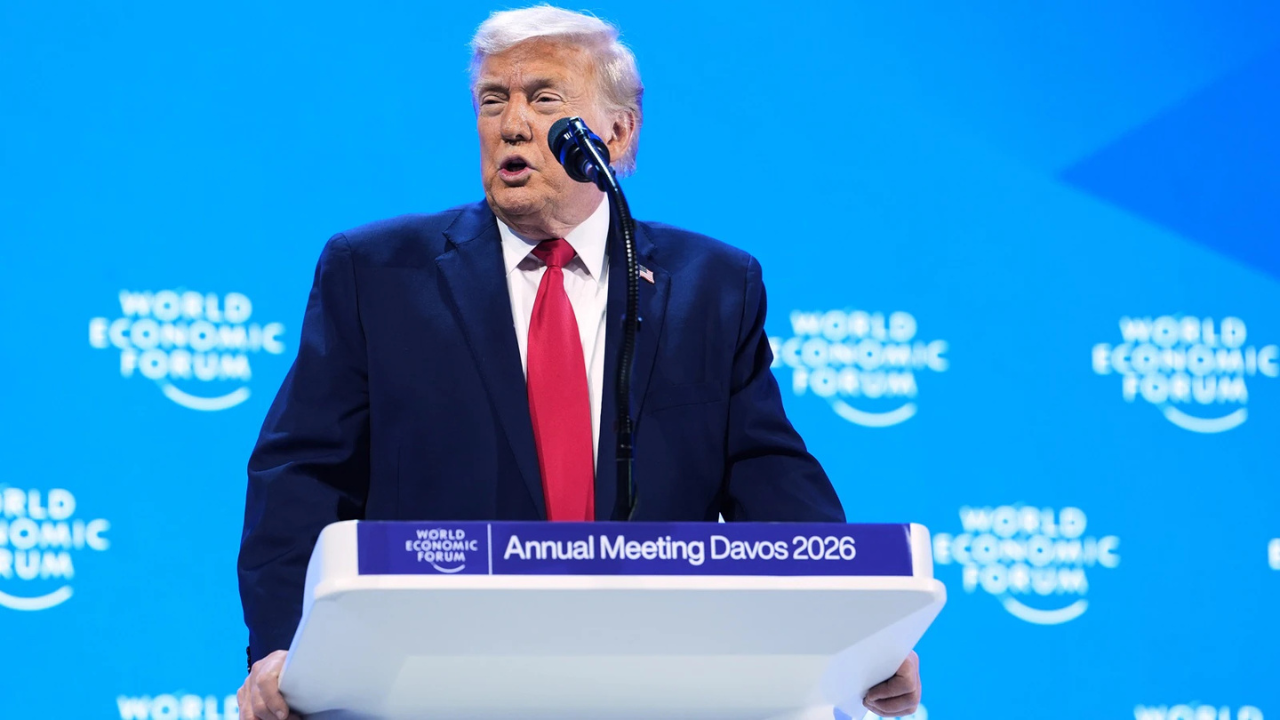
Since returning to the White House in January 2025, President Donald Trump has launched one of the most aggressive economic policy agendas in modern American history. Sweeping tariffs. Trade wars. Immigration crackdowns. Military strikes on Iran. Each decision has sent ripples far beyond America’s borders — reshaping global trade, raising prices for ordinary people, and forcing countries around the world to rethink their relationship with the United States.
Here is a clear, factual breakdown of how Trump’s policies are affecting the global economy in 2026.
1. Tariffs — The Biggest Economic Weapon
Trump’s tariffs are the centerpiece of his economic agenda — and their global impact has been enormous. Since taking office, Trump imposed sweeping tariffs on nearly every major trading partner using emergency presidential powers. China faced tariffs as high as 125 percent. Canada, Mexico, and Europe faced significant levies. The stated goal was to bring manufacturing jobs back to America and reduce trade deficits.
The results have been mixed. The OECD projects that US economic growth will slow from 2.8 percent in 2024 to just 1.5 percent in 2026 — largely due to rising trade costs. Global growth is expected to drop from 3.3 percent to 2.9 percent over the same period. In February 2026, the Supreme Court ruled that Trump had exceeded his legal authority in imposing many of these tariffs — a landmark decision that threw significant parts of his trade agenda into legal uncertainty.
For American households, Trump’s tariffs amount to an average tax increase of $1,500 per household in 2026 alone — with prices rising on everything from electronics and clothing to food and fuel.
2. The Iran Crisis — A Shock to Global Energy
In late February 2026, the United States and Israel launched military strikes that killed Iranian Supreme Leader Ayatollah Ali Khamenei. The strikes effectively shut down the Strait of Hormuz — the critical waterway through which approximately 20 million barrels of oil pass every single day. The economic consequences were immediate and severe.
Oil prices spiked sharply. Every 10 percent increase in oil prices pushes global inflation up by 0.4 percentage points and reduces worldwide economic output by up to 0.2 percent, according to the International Monetary Fund. For American households spending around $2,500 a year on fuel, a 20 percent increase in gasoline prices means an additional $10 drained from their weekly budget — money that would otherwise be spent supporting local businesses and the broader economy.
The energy crisis has also placed central banks in a difficult position worldwide. Higher energy prices feed inflation — but raising interest rates to fight inflation also slows economic growth. There are no easy answers.
3. Global Trade Is Fragmenting
One of the most significant long-term consequences of Trump’s trade policies is the fragmentation of global commerce. Countries that once relied heavily on the American market are actively seeking alternatives. Canada and the European Union have deepened their trade relationship with each other. Asian economies are building new regional alliances. China, despite being the primary target of Trump’s tariffs, has responded with targeted measures — restricting exports of rare earth metals that are critical for technology manufacturing worldwide.
Economists describe this shift as a move from a unified global trading system toward a collection of regional economic blocs — a transformation that reduces efficiency, raises costs, and introduces new vulnerabilities into supply chains that took decades to build.
4. Inflation and the Cost of Living
Trump’s policies have contributed to what economists describe as stagflation — a combination of slower economic growth and faster inflation that is particularly difficult to manage. Major retailers including Walmart and Target have announced price increases directly linked to tariff costs. Nike has raised prices. Subaru has signalled higher costs for consumers. The administration’s response has largely been to encourage companies to absorb the costs — a request that most businesses have declined.
For ordinary Americans, the combination of higher prices and a slowing job market has created real financial pressure. The benefits of Trump’s 2025 tax cuts — which provided meaningful relief to many households — are being eroded for the majority of families by rising fuel and consumer goods prices.
Can Any Leader Pull Off What Trump Did? Here’s What It Actually Takes
5. America’s Global Leadership Is Shifting
Perhaps the most profound long-term consequence of Trump’s economic agenda is a fundamental shift in America’s role in the world. For decades, the United States was the architect and guarantor of the global trading system — the country that wrote the rules and benefited most from them. Trump’s America First approach has stepped back from that role entirely. Countries that once deferred to American economic leadership are now building alternatives.
Europe is investing in its own strategic independence. China is accelerating its push for global economic influence. The world is transitioning from a system built around American leadership to a more fragmented, multipolar order — and that transition carries significant long-term consequences for growth, stability, and prosperity worldwide.

Mohit Swami is the Head of Content at GYANTV, overseeing content strategy, editorial planning, and quality control across the platform. With experience in managing digital content workflows, he ensures that every article aligns with accuracy standards, audience relevance, and ethical publishing practices. His work focuses on building trustworthy, engaging, and reader-first content in health, lifestyle, and trending news categories.